If you’ve ever watched your class dissolve into pencil-tapping, chair-tilting, neighbour-bothering, or endless requests to “go to the bathroom,” you already understand a fundamental truth: middle school students are wired for movement. Read on to find out how brain breaks can support your classroom practice to work with this need, not against it.
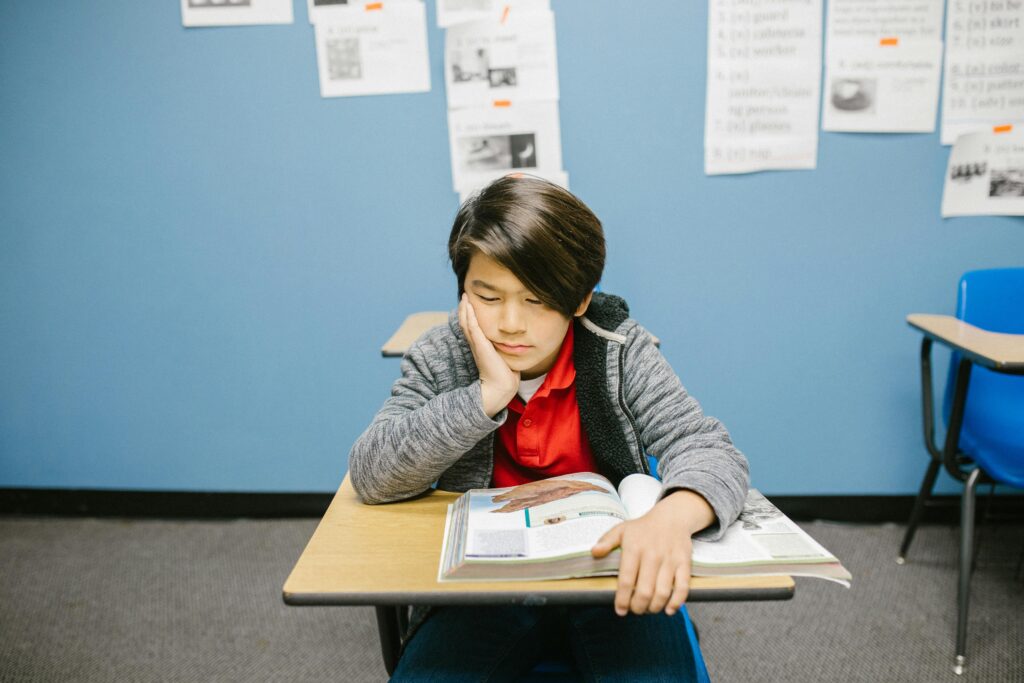
Their bodies are changing rapidly. Their brains are developing at an extraordinary pace. And their ability to sit still for long periods? That’s not a discipline issue – it’s biology.
This is where the science of brain breaks becomes transformative. Far from being a distraction, brain breaks are a research-backed tool for improving focus, behaviour, and overall cognitive wellbeing. In this article, I share what the current research is saying on this topic – check out the last section on this page if you’d like to read further! All in all, brain breaks make learning easier for students, not harder.
Why Brain Breaks Work: The Research Behind Them
Research consistently shows that incorporating short, structured brain breaks into the school day has significant positive effects on students’ learning and wellbeing. When students are given opportunities to move, laugh, or simply reset, they return to tasks with:
- improved clarity
- renewed motivation
- stronger memory retention
- better emotional regulation
Instead of interrupting learning, brain breaks strengthen it. I like to give my students a class structure that follows allocated working time with visual timers (YouTube has lots of beautiful timers with calming music) with built-in brain breaks, before finishing the class with another focused work session and an activity to conclude. It usually looks like 25 minutes work, 10 minute brain break, 20 minutes work, activity and pack up/transiton.
What Brain Breaks Actually Do
Brain breaks are simple mental or physical exercises that interrupt cognitive fatigue and refresh the mind. When used intentionally, they:
- increase engagement and cognitive functioning
- support the brain maturation process
- enhance focus, mood, and learning
- boost students’ perceived competence
- improve classroom behaviour
- strengthen teacher–student relationships
These aren’t small gains – they’re fundamental to how students learn, especially in the middle years.
Why Movement Matters Even More in Middle School
One area middle school educators must prioritise is movement. Early adolescence is marked by rapid biological and neurological changes. Their bodies need physical activity to regulate energy, emotions, and focus. Moving the body helps to expel anxious energy, as well as getting the endorphins flowing.
So when your year 5, 6, 7, or 8 students just can’t stay seated, what happens?
Walks to the pencil sharpener.
Endless requests to go to the restroom.
Poking or bothering their neighbour.
Being vocally disruptive.
Students I’ve worked with would start throwing things across the room some days!
Brain breaks provide a structured and positive alternative. Rather than reprimanding a student for needing to move, we offer a quick, purposeful activity that resets their mind and body. Playing a quick game or dancing to music is also a quick way to get dopamine, serotonin, and other “happy chemicals” moving!
The Added Benefits of Physical Brain Breaks
All brain breaks are helpful, but physical ones offer powerful additional benefits:
- increased circulation
- higher oxygen levels in the bloodstream → improved concentration
- reduced restlessness
- an opportunity to stand, stretch, and reset posture
In a school day that’s more sedentary than ever, these moments are essential.
Brain Breaks Enhance Learning Without Extending the School Day
Brain breaks give schools a meaningful way to increase physical activity without cutting academic time or extending the timetable.
They help students:
- transition between lessons
- shift from one type of cognitive demand to another
- regulate their energy levels
- re-engage with new learning
In just one or two minutes, you can reclaim the focus and momentum that would otherwise be lost to restlessness or frustration. A brain break is not “time off task” – it’s a tool for getting students back on task, with a better chance of staying there.
Why Brain Breaks Are Essential, Not Optional
When students’ biological and cognitive needs are unmet, teachers see:
- increased low-level behaviour
- decreased engagement
- emotional dysregulation
- reduced stamina for learning
Brain breaks address these issues at the source. They don’t just help students learn – they help them access learning in the first pace. By recognising that middle school brains and bodies require movement, we create classrooms that work with adolescent development, not against it.
Final Thoughts
Brain breaks are a small investment with a massive return. They improve behaviour, lift mood, reset attention, and help students navigate the transitions that can derail learning. Most importantly, they honour what early adolescents need to thrive.
If you want calmer classrooms, more engaged learners, and stronger relationships, start small:
Give them a break.
Try These Ready-to-Use Brain Break Resources
If you want to bring brain breaks into your classroom without adding to your planning time, these two TpT resources make it easy:
No-Prep Brain Break Cards – 24 Movement, Game, and Mindfulness Activities
A quick, grab-and-go set of 24 cards that help students reset through movement, mini games, and calming activities. Perfect for transitions or focus boosts.
https://www.teacherspayteachers.com/Product/No-Prep-Brain-Break-Cards-24-Movement-Game-and-Mindfulness-Activities-14199378
Charades Cards | Early Primary Brain Breaks, Drama Warm-Ups & Movement Cards
Fun, imaginative movement cards ideal for early primary brain breaks or drama warm-ups. Great for getting kids moving, giggling, and re-engaged.
https://www.teacherspayteachers.com/Product/Charades-Cards-Early-Primary-Brain-Breaks-Drama-Warm-Ups-Movement-Cards-13549300
References and Further Reading
https://tpd.edu.au/best-brain-breaks-for-kids/
Barker, M. M. (2021). Brain breaks improve student behavior and focus.
Graeve, N. R. (2025). Improving Academics Using Brain Breaks.
Vander Waal, J. L. (2020). Brain Breaks and Engagement.